
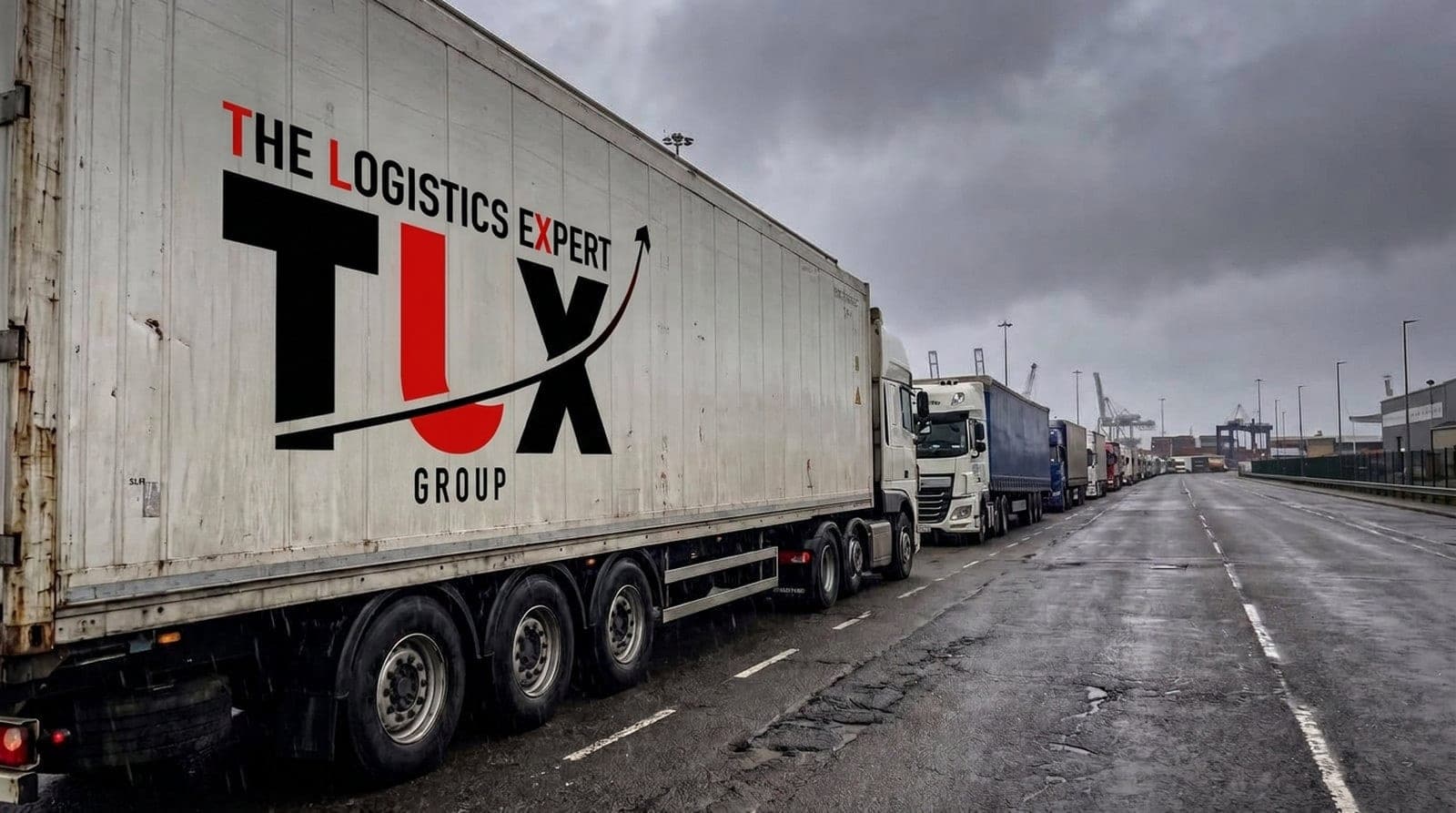
At the centre of the news for the past few weeks, goods transport is a hot topic when it comes to matters of Brexit and the EU. On top of rising costs, changing policy, increased documentation, and hold-ups across the Channel, navigating changing regulations during a global pandemic – with its constant staff shortages and outbreaks of disease – has been a real challenge for the industry.
Full customs checks on all imports are due to start on the 1st January 2022, but tariffs, VAT, and duties may be deferred until the end of the year, but many freight companies are having to start planning now. And just at a time when they need to make a profit to see us through some potentially tough times ahead, the worker shortages are driven up the cost of hiring drivers.
As a result, the drivers that are currently on the payroll are often having to work longer hours, compounded by the gridlocks that have taken place on the Channel crossing.
It is estimated that the transport industry is short of almost 70,000 drivers. In some companies, directors and managers are even having to help out with driving, just to keep the vehicles on the road.
In general, it is a mixed picture for drivers at the moment. Wages are high, but there aren’t enough staff. There is continuous support (and some might even say pressure) from supermarkets to keep goods on the shelves, and they are paying their drivers well – but smaller freight companies are struggling to compete with the larger corporations.
What Is Causing The Driver Shortage?
Many factors are influencing the ongoing driver shortage.
Factors contributing to the shortage are wages, working conditions, an ageing workforce, and the cost of training new drivers. While there are plenty of people with the qualification to drive a truck, many drivers are leaving the industry because they are unhappy with their wages.
The wage for truck drivers has struggled to keep up with the cost of living in recent years, and as such, many truckers have started to look for work elsewhere.
This is compounded by issues of working conditions. While there are many fair employers within the courier industry, there are always a few companies who set their drivers unreasonably long shifts, extra unpaid duties, and who that their staff poorly. And when companies are struggling, mistakes tend to be made.
To alleviate some of the pressure to hire more drivers, the government plans to relax the restrictions on the number of hours a driver can work. However, this is a short-term fix, that could lead to its own issues.
Rod MacKenzie, managing director of the Road Haulage Association pointed out that, ‘Tired drivers do not make better drivers’.
Indeed, increasing the number of hours that drivers are on the road may lead to more dangerous driving – not just for truck drivers, but also for other road users and members of the general public.
It is hoped that increasing wages may help to incentivise employees, but with a limited workforce, only so much can be achieved.
But expanding the workforce is not easy either. Training new drivers is time-consuming and expensive, and as a result, there are limited numbers of drivers that can be trained each year.
Arguably the best solution would be to appeal to drivers who have found employment elsewhere to return to lorry driving with better wages and working conditions.
Brexit And Beaurocracy
In February 2021, the Times reported that some customers were waiting up to two months for their parcels to be delivered as a result of Brexit complications. Some customers have even received a text message from companies such as DPD asking them to pay extra charges of up to £150 due to the changes. These experiences could put off customers buying delivered goods from abroad.
Another major effect of the Brexit changes is the amount – and type – of paperwork that needs to be done before anything can be shipped abroad.
Delivery company DPD has suspended road deliveries to the EU and Ireland because of the challenges presented by Brexit, saying that as many as 20% of parcels had to be returned to sender as incomplete data was attached. Couriers are also responsible for collecting extra customs and VAT charges, which results in a large amount of paperwork for under-resourced courier teams.
These changes to rules have contributed to the delays at ports, resulting in many parcels arriving late throughout the UK and EU.
The Long Haulage
Although there may be some benefits for individual drivers such as higher wages, Brexit has caused complications for the transport industry that may affect working conditions – for example, longer hours, traffic delays, and unrealistic amounts of paperwork.
Additionally, smaller courier companies may struggle to keep up with the demand for workers, and to complete office tasks such as clearly labelling goods.
These issues appear unlikely to resolve themselves while we are still navigating our departure from Europe, and may also continue for some time afterwards.
Couriering has been a reliable and valuable industry for many years now, and much of our country’s economy relies on the transport industry in order to operate effectively. Now, it is important that the support will be returned.
Sources
https://www.bbc.co.uk/news/business-55734277
https://www.scotsman.com/business/driver-shortage-biggest-post-brexit-roadblock-for-haulage-industry-3284078
https://www.commercialfleet.org/news/truck-news/2021/07/08/shortage-of-hgv-drivers-exacerbated-as-uk-economy-bounces-back
Article produced by Alex Belsey from New Frontiers Marketing